Why Norweco Singulair Green Is Gaining Attention in Wantage NJ

In Wantage, septic decisions are rarely casual. Homeowners here tend to think about wastewater systems only when they have to, but when they do, the stakes are high. A failed or undersized setup can disrupt daily life, trigger expensive repairs, and create permitting headaches that seem to linger far longer than anyone expects. That is one reason the Norweco Singulair Green system has started coming up more often in local conversations. People are looking for wastewater treatment options that do more than simply check a box. They want performance, flexibility, and a setup that can make sense on challenging lots.
The growing interest in norweco singulair green Wantage NJ is not hard to understand once you look at the local conditions. Sussex County properties often come with the kind of variables that complicate standard septic design: sloping terrain, rocky ground, seasonal water issues, older homes with outdated systems, and parcels where available installation area is tighter than the listing photos suggest. A conventional septic system still works well in the right setting, but not every property presents the right setting. That gap is where advanced treatment systems start to matter.
Why Wantage homeowners are paying closer attention
Wantage has a mix of older rural homes, newer custom builds, and properties that have been expanded over time. That matters because wastewater treatment needs are shaped by both the house and the lot. A three-bedroom ranch built decades ago may be sitting on a system designed for water use habits that no longer apply. Add a finished basement, larger family occupancy, or an accessory structure, and the original assumptions can break down quickly.
At the same time, regulations and site review standards are not getting looser. If anything, people are more aware now that they need a system that will satisfy engineering requirements, local approvals, and long-term reliability. Homeowners are also better informed than they used to be. They read permit documents, ask installers pointed questions, and compare options rather than accepting the first recommendation.
That change in behavior has helped systems like the Norweco Singulair Green gain attention. It offers a different path for sites where a conventional septic layout may be impractical or where higher treatment quality can improve the odds of a successful design. For the homeowner, that often translates into one central question: can this system solve a site problem without creating three new maintenance problems later? That is where the details matter.
What the Singulair Green system actually is
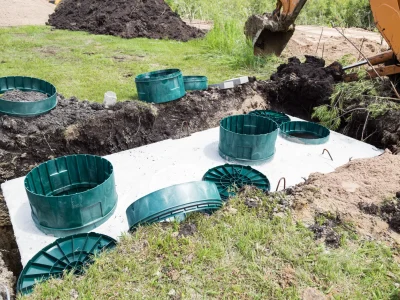
The Norweco Singulair Green is an aerobic treatment system. In practical terms, that means it treats wastewater with the help of oxygen, promoting biological activity that breaks down waste more efficiently than a standard septic tank alone. Conventional septic systems largely rely on settling and anaerobic digestion in the tank, followed by treatment in the soil absorption field. An aerobic system adds another level of treatment before the water reaches final dispersal.
That distinction matters because the quality of effluent leaving the treatment unit can influence what designers are able to do downstream. Better-treated effluent can help on sites where soil conditions, lot layout, or environmental constraints make a basic gravity system less attractive or less feasible.
This does not mean an aerobic system is automatically the better choice for every property. It does mean it belongs in the conversation, especially where site limitations exist. In my experience, the homeowners who become most interested in systems like this are not chasing novelty. They are usually reacting to a real design challenge. Sometimes the lot is constrained. Sometimes a replacement system needs to fit around existing improvements. Sometimes there is concern about environmental sensitivity or water quality. Sometimes the owner simply wants a higher level of treatment and is willing to maintain it.
The local factors that make advanced treatment more relevant
A septic system never exists in the abstract. It lives in a specific place, under specific use patterns, in specific soil and weather conditions. Wantage presents several variables that can make advanced treatment systems more compelling.
For one, topography can complicate dispersal system design. A beautiful sloped lot may offer long views and privacy, but wastewater dispersal has to obey gravity, setbacks, and soil conditions, not scenic priorities. Then there is the issue of usable area. Plenty of properties look spacious on paper, yet the buildable or approvable septic area is hemmed in by wells, wetlands, driveways, retaining walls, streams, easements, or previous disturbances.
Soils are another factor. Not every property has deep, uniformly suitable soil where a conventional layout can be installed without difficulty. When the soil profile or seasonal groundwater conditions are less than ideal, treatment before dispersal becomes even more important.
Older housing stock also pushes the conversation. In communities like Wantage, many homeowners are not starting from scratch. They are replacing aging systems, repairing failed ones, or trying to accommodate renovations without triggering a major site conflict. An advanced treatment unit can sometimes give the engineer more room to work with, at least conceptually, than a standard tank-and-field approach alone.
Why the system is appealing to homeowners, engineers, and installers
The appeal of the Norweco Singulair Green system tends to fall into three overlapping categories: treatment quality, design flexibility, and managed maintenance. Each of those matters to a different person in the process.
Homeowners usually focus first on whether the system can be approved and whether it will be dependable. Engineers tend to look at treatment performance and how the system fits a site plan. Installers and service providers are often concerned with accessibility, component quality, and whether the system can be maintained in a realistic way over the next ten or twenty years.
Those interests can clash with some products. A design that looks elegant on a plan sheet can become a headache if access for service is poor or if the owner is not prepared for ongoing maintenance. What has helped systems like Singulair Green gain traction is that they fit into a service-based model people now understand better. The system is not a set-it-and-forget-it tank buried in the yard. It is a treatment unit that performs best when inspected and maintained on schedule.
That may sound like a drawback, and for some owners it is. But there is another side to it. Homeowners who are comfortable servicing HVAC equipment, water treatment equipment, or standby generators often grasp the logic immediately. Better treatment comes with more active oversight. If the service network is competent and responsive, that arrangement can be perfectly reasonable.
Performance matters more than branding
It is easy for septic discussions to drift into brand loyalty, but that is usually the wrong frame. What matters most is whether the chosen system is appropriate for the site, correctly sized, properly installed, and responsibly maintained. A good product installed poorly will disappoint. A sound design neglected for years will eventually fail. A homeowner who buys solely on lowest upfront price often learns later that the cheap option was only cheap at the first invoice.
The reason norweco singulair green Wantage NJ has become a meaningful search phrase is not just brand recognition. It reflects a local need for systems that can address challenging site conditions without compromising treatment quality. People are trying to solve practical problems. If a product repeatedly shows up in engineering discussions or contractor recommendations, it is usually because it has a track record of fitting certain kinds of projects.
That does not mean every recommendation is equal. Homeowners should still ask who will service the unit, how frequently it needs inspection, what the common repair items are, and what the expected operating costs might be. Those are not skeptical questions. They are responsible ones.
The cost conversation, honestly handled
Cost is often the most delicate part of the discussion because homeowners want certainty, and septic projects rarely provide it upfront. The installed cost of an advanced treatment system can vary widely based on excavation conditions, site access, electrical work, pump requirements, soil dispersal design, local permitting, and whether the job is new construction or replacement.
In general terms, advanced treatment systems usually cost more at installation than a straightforward conventional system on an easy lot. They may also carry ongoing service costs and modest electrical consumption. That is the honest answer.
But the comparison should not be made against an ideal conventional system that the site cannot actually support. The real comparison is often between an advanced system and the best alternative available for that property. On a constrained lot, the advanced system may not be the premium option. It may be the workable option. And if it allows a project to move forward where a standard design stalls out, the value proposition changes fast.
There is also a long-term perspective that gets missed. Repairing a failing, marginal, or poorly matched septic setup can turn into repeated excavation, landscaping damage, pump-outs, emergency service calls, and property use restrictions. Those costs rarely appear on the first estimate, but they are real. Many homeowners in rural New Jersey have stories about trying to save money on wastewater infrastructure and paying for it later, usually at the worst possible time, often in wet weather, and never on a convenient weekday.
Maintenance is part of the deal
One of the reasons the Norweco Singulair Green system generates both interest and hesitation is that it asks the owner to accept a maintenance mindset. That is not a flaw. It is simply part of the category.
A conventional septic tank can lull owners into ignoring it for years, which is common but not wise. An aerobic treatment unit makes neglect harder to hide. It has components that should be inspected. It may have alarms or controls. It benefits from regular service. In many cases, that is exactly why professionals prefer it on difficult sites. Managed systems can be monitored.
The homeowners who do best with advanced treatment are usually the ones who understand a few basics:
- service intervals matter
- electrical components need protection and inspection
- water use habits still affect system performance
- flushable wipes are not actually flushable
- maintenance records are worth keeping
That small amount of discipline goes a long way. Most problems with onsite wastewater systems do not begin as catastrophic failures. They start as small ignored issues, a clogged filter, a blower problem, excessive solids, a damaged float, a wet weather strain on the dispersal area, or years of abuse from things that never belonged in the system.
How this plays out on real properties
The appeal of the Singulair Green becomes easiest to understand when you picture the kinds of situations local owners face.
Take an older home with a system nearing the end of its useful life. The property has a decent amount of acreage, but the practical septic area is squeezed by the well location, a driveway expansion, and a slope that eliminates one portion of the lot from consideration. The owner wants to add a bedroom for an aging parent. A standard replacement may still be possible, but the design margins are thin. In a case like that, an advanced treatment system can open design possibilities that a basic setup may not.
Or consider a newer home on a site with ledge, uneven soils, or grading constraints. The house itself is not the challenge. The land is. If the treatment train can improve effluent quality before dispersal, the overall system may be easier to fit into the approved envelope.
There are also buyers who think ahead. They are not replacing a failed septic system. They are building once and want infrastructure that matches the investment they are making in the property. That buyer may be less focused on minimizing initial cost and more focused on choosing a system with solid treatment performance and a clear maintenance path.
None of these cases mean the Singulair Green is always the answer. They explain why it keeps entering the conversation.
Questions smart homeowners should ask before choosing one
A septic system is one of those purchases where the quality of the questions often determines the quality of the outcome. Homeowners evaluating an advanced treatment unit should press beyond the brochure and ask about local fit.
Start with the basics. Has the engineer designed with this system before on similar Sussex County sites? Who will provide service after installation? How often are service visits recommended or required? What components are considered normal wear items? What warning signs should the owner watch for? If the unit loses power during a storm, what happens in the short term and what needs to happen if the outage lasts?
A good contractor or designer should be able to answer those questions in plain language. If the answers are vague, overly polished, or dismissive, that is useful information. Wastewater work rewards clarity. Homeowners should not need to decode jargon to understand what they are buying.
It is also worth asking about winter access. That sounds minor until the first snow-covered service call. Lids, ports, and control components should be located with practical maintenance in mind. The best paper design in the world becomes a nuisance if routine service requires unnecessary digging, awkward access, or avoidable disruption to finished landscaping.
The environmental angle, without overselling it
People sometimes overstate the environmental claims around advanced treatment systems, so it is worth being precise. Better treatment before dispersal can reduce pollutant loading and improve effluent quality relative to simpler treatment stages alone. That is meaningful, especially in areas where groundwater protection and responsible onsite wastewater management matter.
But environmental benefit does not come from technology alone. It comes from correct design, proper installation, and ongoing care. A neglected advanced system can lose its advantages quickly. On the other hand, a well-maintained treatment unit on a sensitive or constrained site can be a more responsible choice than forcing a conventional approach where it barely fits.
In a place like Wantage, where private wells and rural land use remain central realities, people tend to understand that wastewater decisions are not abstract policy issues. They affect the land they live on and the water they rely on. That tends to make the discussion more practical and less ideological.
Why attention is increasing now
Several trends seem to be driving the increased visibility of norweco singulair green Wantage NJ. First, more homeowners are dealing with aging septic infrastructure. Second, construction and renovation costs have made people more serious about doing infrastructure work correctly the first time. Third, difficult lots are not getting easier, and standard designs do not magically become more suitable just because the owner hopes they will.
There is also a broader shift in expectations. Homeowners are more willing than they were fifteen or twenty years ago to accept specialized systems if the trade-off is better performance or a workable permit path. They already live with serviceable equipment in norweco singulair green Wantage NJ other parts of the house. An advanced wastewater system no longer feels as foreign as it once did.
Professionals in the field have adapted too. Engineers, installers, and service companies have more experience with advanced treatment options than they did a generation ago. Familiarity reduces resistance. When local professionals know how to design, install, and maintain a system properly, homeowner confidence tends to rise.
Where caution still makes sense
Interest should not be mistaken for universal suitability. There are plenty of properties in Wantage where a conventional septic system remains the simplest and best answer. If the soils are favorable, the layout is clean, and the site provides adequate room, there may be no good reason to introduce additional mechanical components and service requirements.
There are also homeowners who are poor candidates for any managed treatment system, usually because they want zero maintenance, rarely occupy the property, or are unlikely to respond promptly to service needs. A system should fit the owner as much as the lot.
Another point that deserves honesty is that advanced systems depend on competent support. A great product paired with weak local service can become frustrating. Before committing, owners should feel comfortable that qualified maintenance and repair help is available within a reasonable distance and timeframe.
The practical bottom line for Wantage properties
The rising attention around the Norweco Singulair Green system in Wantage is not hype for its own sake. It reflects a local reality. Many properties need more than a one-size-fits-all septic answer, and many homeowners are looking for systems that can meet stricter site demands without sacrificing treatment quality.
For some lots, the Singulair Green may offer a sensible path where conventional designs become strained or complicated. For others, it may simply provide peace of mind through higher treatment performance and a structured maintenance approach. And for still others, it may not be the right fit at all.
That is how septic choices should be made, not by chasing trends, but by matching the system to the land, the house, the regulations, and the owner’s willingness to maintain it. In that kind of decision-making environment, it makes perfect sense that norweco singulair green Wantage NJ is drawing more attention. The system answers a specific set of real local needs, and in wastewater work, that is usually what earns staying power.
Excavating New Jersey LLC
406 County Rd 565
Wantage, NJ 07461, United States
Phone: +1 (973) 791-4284
FAQ About norweco singulair green Wantage NJ
How does a Norweco septic system work?
Singulair Green uses aerobic biological treatment in a polyethylene tank, followed by settling and filtration. The treatment unit is one part of a complete wastewater system; the site design also determines how treated effluent is dispersed.
How much does a Norweco septic system cost in NJ?
A useful estimate requires a property evaluation. Excavation access, soil conditions, engineering, electrical work, the disposal field, and restoration can affect the total. Ask Excavating New Jersey LLC for a written scope that distinguishes installation costs from ongoing service costs.
Are Norweco septic systems good?
Singulair Green is an established aerobic treatment option, but suitability depends on the property and proposed design. Compare the model's documented performance, maintenance needs, and total project scope with alternatives before deciding.